


Progressive Design-Build is a collaborative, early-contractor-involvement project delivery model that is intended to reduce risk to all parties involved. This model introduces additional steps to traditional project delivery that allow the owner and design-builder to collaborate and progressively develop a design solution before moving directly into detailed design and construction.
How is the Progressive Design-Build Process Structured?
With Progressive Design-Build, there are additional steps compared to the traditional model so that owners, designers and contractors work together to reduce project risk, mostly in large infrastructure projects.
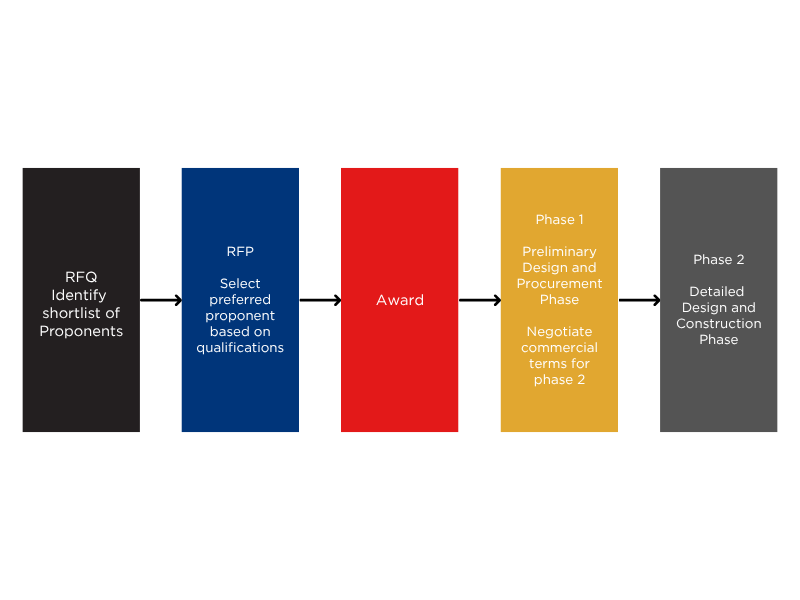
The design-builder delivers the project in two phases:
- Phase 1 includes the preliminary design and pre-construction services.
- Phase 2 includes the final design and construction services.
Each phase can be done in one or two contracts, often with Early Works Agreements, or Purchase Orders for early works.
Figure 1. Progressive-Design Build Structure
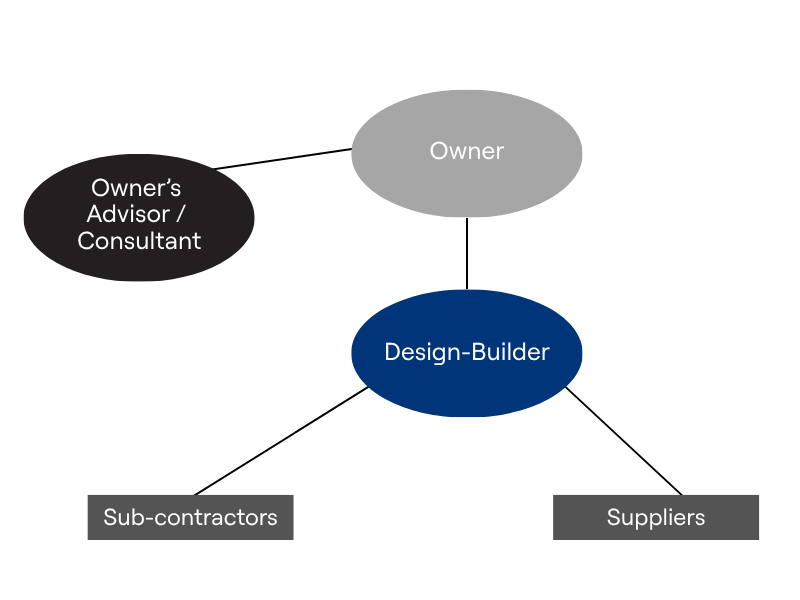
Figure 2. Progressive Design-Build Process
Why Progressive Design-Build?
In the traditional model, significant risk is transferred to the contractor, but the risk often doesn’t become known until after the contract is awarded. For example, in the last five years, price escalations, supplier insolvency, delays in supply chain, and environmental events have resulted in significant losses across the construction industry.
- Owners procuring under traditional delivery models like design-bid-build, design build, or P3 on a fixed price basis are often not receiving enough bidders to confirm prices are competitive and the prices received are often too high to justify proceeding with construction. Plus, there is often value to owners to have the contractor, construction manager, or design-builder involved earlier on in the projects.
By optimizing the traditional model, there are several benefits for all parties involved.
- Owner selects design-build team (contracting partner) prior to finalizing functional program and budget.
- Single point of accountability
- Qualification based selection – not solely on price
- Owner and contracting partner are allies from the outset, working collaboratively together to define the project requirements, design, pricing and risk
- Can reduce project costs and disruptive delays or claims
- The design-builder is not required to develop preliminary work design for RFP.
- Shorter procurement period
- No honorariums are necessary, as the design-builder gets paid for design work performed in phase 1.
- The designer can better understand the project requirements, as well as owner and stakeholder expectations, enabling them to tailor the design to meet the project needs while understanding or minimizing the risks.
- Owners can be more involved in design decisions.
- For contract structure, open-book preliminary (phase 1) may be paired with a variety of contracting models (switch to fixed-price/GMP design-build later) for project execution (phase 2).
- Owners defer obtaining price, schedule, and performance commitments from design-builders until after the design has been sufficiently defined.
- Owners have an “off-ramp” should the owner reject the design-builder’s price or other commercial terms.
- Owners have the option to go out to market with advanced design and pricing/budget to competitively bid.
However, Progressive Design-Build is not without its own challenges. Project financing may be difficult, although not impossible, when the cost of the project is not known. Special forms of insurance may be necessary. These types of contracts require heightened levels of collaboration and cooperation, which may not always work with the parties involved. Lastly, due to the newness of the contract models, there is limited experience and the contracts are unique.
When should you use Progressive Design-Build?
Keeping the challenges in mind, there are several situations where a Progressive Design-Build can make sense:
- Scope of the project has not yet been determined
- Owner wants significant hand in design development
- Strong relationship between contracting partner and owner
- More likely beneficial for complex infrastructure projects
Despite the newness of Progressive Design-Build, there are several large-scale successful projects that utilized this model, including:
- Stuart Lake Hospital Redevelopment, BC
- Cariboo Memorial Hospital, BC
- Ontario Line – Pape Tunnel and Underground Stations
- Scarborough Subway Extension – Stations, rail and systems contract
- Quebec Tramway
What should you consider when using Progressive Design-Build?
Because Progressive Design-Build doesn’t follow the traditional delivery model, there are several contract components to consider and implement. For projects with one contract for both phases, there should be a clear process for how to address the commercial proposal for phase 2 and the information to be provided by the design-builder, as well as a clear off-ramp in the event the owner and design-builder cannot agree to phase 2 pricing and schedule.
If there are two contracts, one for each phase, there is a need to address the process for developing and agreeing to early works packages and the applicable commercial terms.
While Progressive Design-Build minimizes risk for all parties, risk allocation should be clearly outlined. The owner will initially sign a cost-plus design-build contract at the beginning of a Progressive Design B[KA2.1]uild contract, until enough information and design is known to get cost certainty. Once sufficient information is obtained, the parties should be able to negotiate a fixed price or Guaranteed Maximum Price (GMP), and the price risk is taken by design-builder. In the current environment, some design-builders will still not agree to a lump sum or GMP and will only agree to put a portion of their fee at risk, and in that situation, the risk is shared between owner and design-builder.
Additional best practices and tips:
- Carefully consider whether Progressive Design Build is the right project delivery model.
- Are there limitations on the criteria that must be applied for choosing the successful proponent?
- Are the parties experienced with and committed to a collaborative project model?
- Do the parties have a good relationship working together previously?
- Prepare periodic estimates as the design detail progresses to compare to budget, identify scope creep, and reduce chance of not being able to agree to a final price.
- If using one contract, ensure that the contract revisions required for phase 2 are completed, so that the written agreements reflect the bargain made.
- As an owner, if things are not going well, best to use the off-ramp early before becoming too entrenched with contractor.
- During phase 1, create clearly worded risk register with allocation to parties
- As a design-builder, consider subcontract language for transition to phase 2.
- Automatic transition if phase 2 in prime contract proceeds, as one wants to prevent last minute negotiations with trades on prices, scope, etc.
- Automatic termination if phase 2 in prime contract does not proceed
- Considerations for design-builders for transition to phase 2
- Best to have outside date for transition, once price and schedule agreed
- Consider insisting on mutual ability to terminate
- Consider including deadlines for financing and government approvals, after which cost and schedule impacts are claimable, or termination right if not achieved by deadline
VERTEX’s project advisory construction professionals offer a myriad of services to all stakeholders associated with real estate ownership, management and development. To begin a discussion on how we can support your next project, submit an inquiry through our contact form.

The Author
David Magarici Nahon
P.Eng, PMP, Meng
Consultant, Surety
David Magarici Nahon, MEng, P.Eng, is a Consultant on VERTEX’s Surety team, specializing in structural assessments, risk analysis, and claims.