


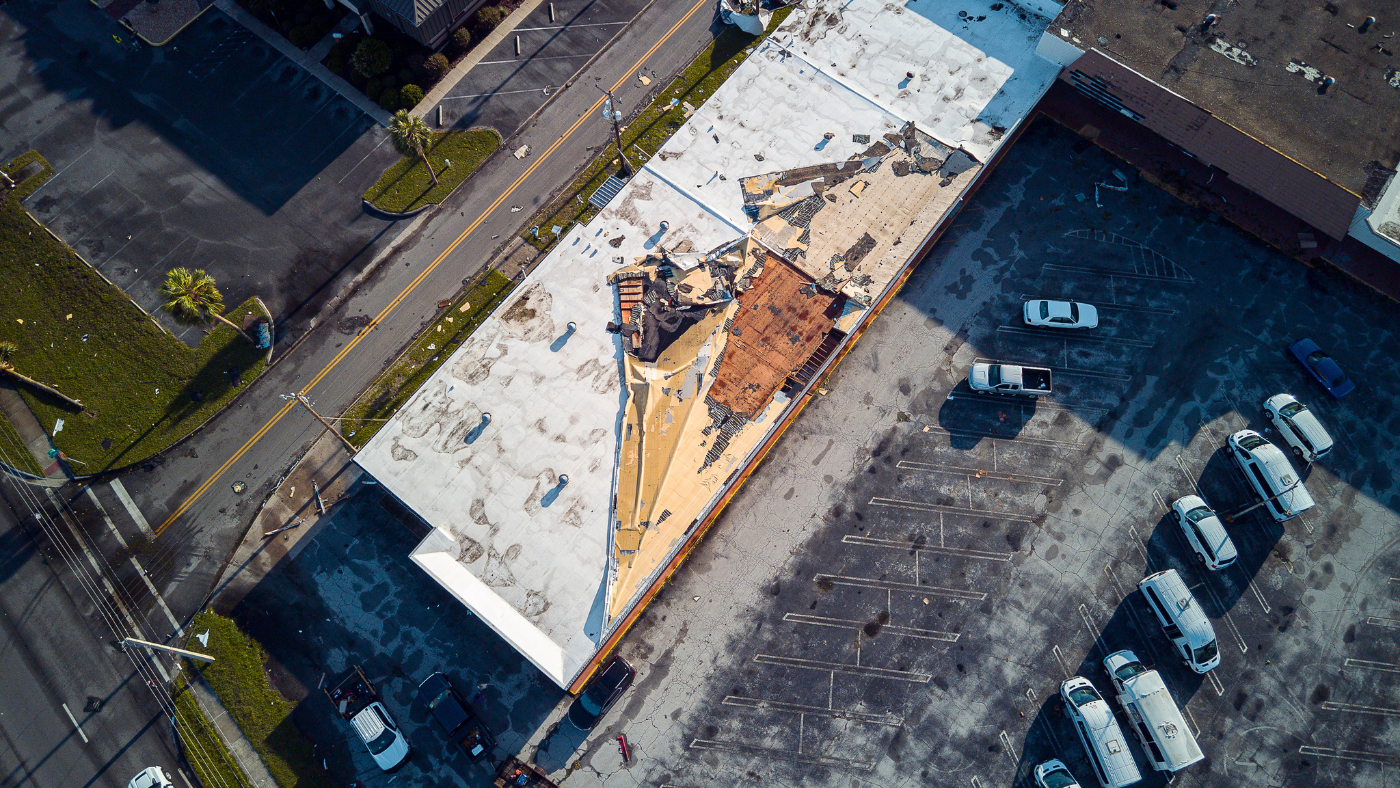
“Rain collapses roof of Target store in Alhambra”, “Roof collapses at San Rafael Home Goods in 1st rain of the season”, “Heavy rains cause roof collapse at downtown Pawnee fixture”, “Roof collapses at Melbourne community center following torrential rain”, and “Heavy rain causes roof collapse at former movie studio in Atlanta”.
Why might such roof collapses occur? Are the cause(s) related to rainstorms exceeding building code criteria, design- or construction-related, maintenance conditions on the part of the building owners, or maybe even some combination of these? Experienced forensic experts can assist with evaluating potential cause(s) of such failures and also help determine the extent of the damage, provide a conceptual repair protocol, or develop a cost estimate for repairs after such a failure has occurred.
Relevant definitions, interpretations, and commentary
The current edition of the International Building Code (IBC) provides the following definition:
“Positive roof drainage. A design that accounts for deflections from all design loads and has sufficient additional slope to ensure that drainage of the roof occurs within 48 hours of precipitation.“
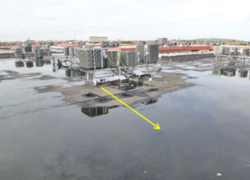
The current edition of ASCE 7 (which is a referenced standard in the IBC) provides the following definitions:
“Ponding: The accumulation of water caused by the deflection of the roof structure, resulting in added load.“
“Ponding instability: Member instability caused by progressive deflection because of ponding on roofs.”
As is the case with many definitions, these definitions are somewhat open to interpretation. For example, how does a group such as the Florida Building Commission interpret the definition of “positive roof drainage”? The following question was posed to them:
“… if the standing water evaporates within 48 hours, does this meet the definition of ‘positive roof drainage’?”
To which they provided the following response:
“No. According to the definition of the term ‘positive roof drainage’, additional slope must be provided to ensure drainage of the roof within 48 hours of precipitation.”
However, it has been reported that: “Water standing on a roof for two days is the definition of ‘poor drainage’, not ‘positive drainage’”, and that:
- “The criterion is imprecise and has no relationship to good drainage.”
- “Water should drain freely and quickly and not stand on a roof for an extended period of time, let alone two days.”
- “Hardly any roofing contractor will test the roof (before reroofing) by flooding it, the waiting for 48 hours to observe the areas where the water is still present.”
- “There is no mandate in the code for third-party inspection of the process and how the faulty situation is to be corrected.”
- “A roof could be dead flat, surrounded by parapet walls without any overflow drainage, and could still meet the requirement of positive drainage, while remaining highly prone to ponding instability and collapse.”
With respect to the definition of ponding instability, the following is notable as related to the average slope of a deflected member:
“The building code establishes the minimum parameters for building design. A member or system that satisfies each code parameter may create a less than ideal condition when multiple minimum code parameters are combined. The combination of the 1/4 inch per foot design slope and a maximum permitted deflection ratio creates such a condition…” – structuremag.org
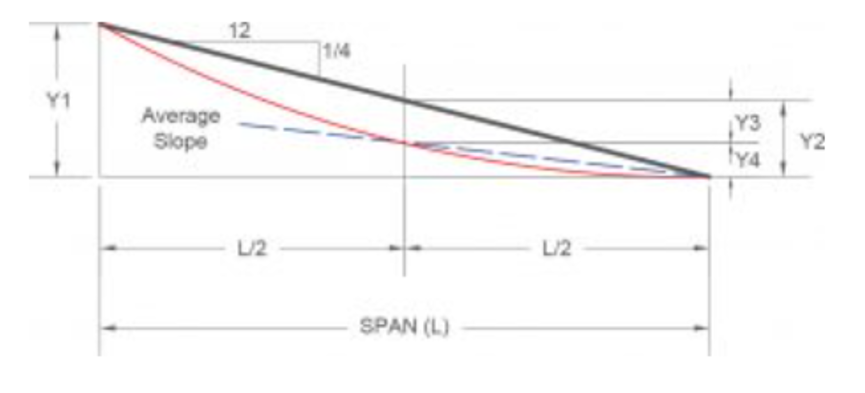
Illustration of average slope of member which meets code-minimum slope and maximum deflection ratio requirements. –structuremag.org
Certain professionals recommend better coordination between roof slopes (which are often specified/established by the architect, based on building code requirements) and maximum structural member deflection ratios (which are often specified/established by the structural engineer, based on building code requirements) to help reduce the possibility of ponding instabilities. Specifically, the following design slopes are recommended for a “residual 1/4 in 12 surface”.
| T.L. Ratio | Slope in 12 |
|---|---|
| L/120 | 0.750 |
| L/180 | 0.625 |
| L/240 | 0.500 |
| L/360 | 0.500 |
| L/480 | 0.375 |
Basically, the recommendation is that significantly lower than code-maximum/allowable deflection ratios should be specified as roof slopes approach the code minimums, or significantly higher than code-minimum/allowable roof slopes should be specified as deflection ratios approach the code-allowable maximums. The designers/specifiers should not be specifying code-maximum/allowable deflection ratios combined with code-minimum/allowable roof slopes.
Case study: Industrial building roof collapse
Overview
- Georgia
- Industrial building originally constructed between 1966 and 1970
- Building had been added onto multiple times over the years since then
- Roof collapse reportedly attributed to “sheer volume of rain water”
- Site-specific sustained wind speeds of 13 MPH, and gust wind speeds of 17 MPH on the date of loss (2022)
- Maximum hourly rate of rainfall was approximately 3.21 inches on DOL, with 3.27 inches total rainfall that day, both of which were below the reported 100-year hourly rainfall rate for the site
- Roof collapse occurred at original portion of building; not at the additions
- Permit was initially obtained for reroofing activities that commenced in 2016, but it was never “finalized”; no inspections were called for by the contractor, or completed by the building department
- Damaged elements had been removed and disposed of prior to the engineer’s site inspection
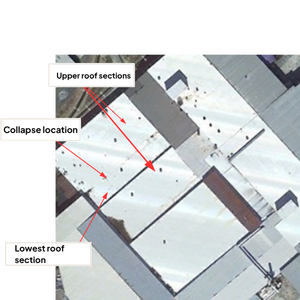
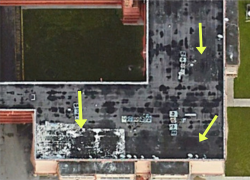
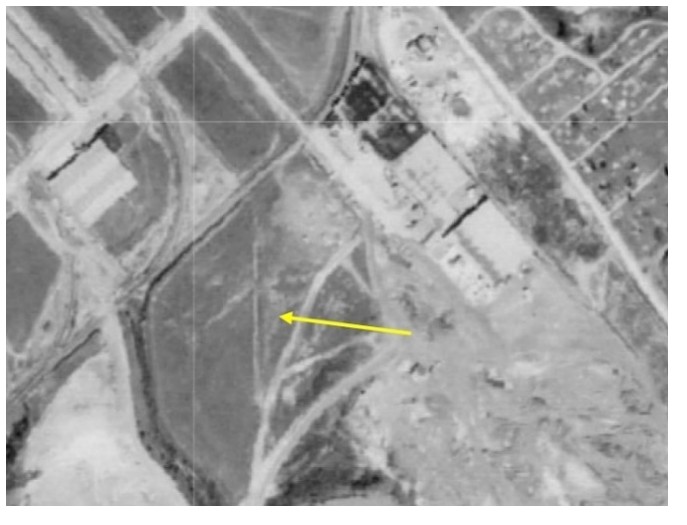
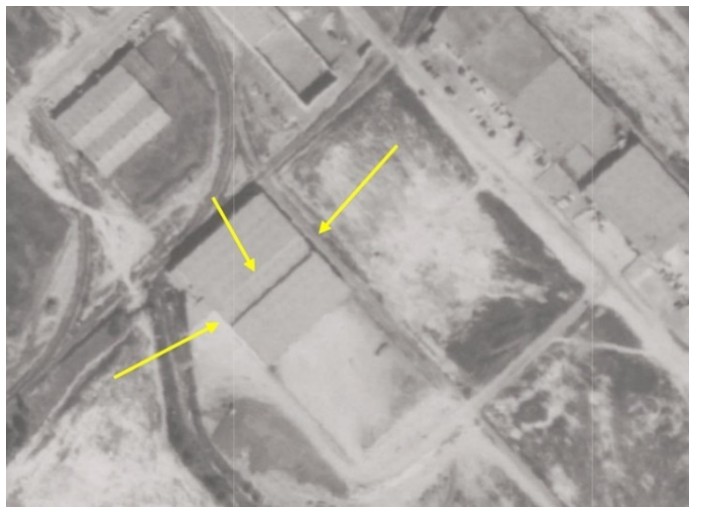
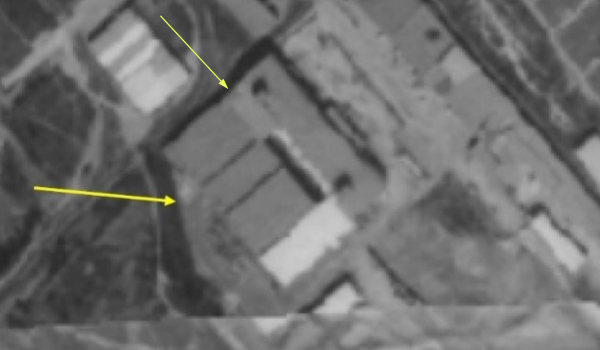
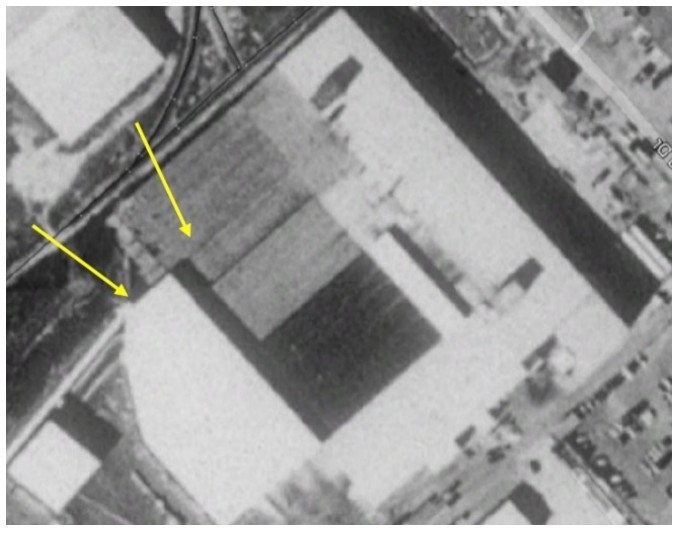
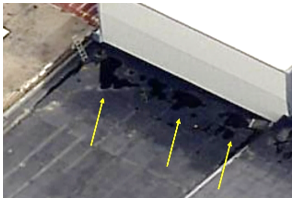
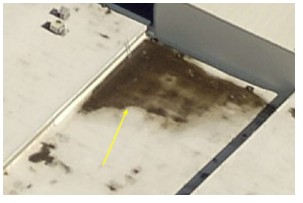
Aerial imagery from various sources evidenced that the building had a history of additions, each of which increased the potential for drainage issues at the lowest roof surface, as can be seen in the series of photographs below. Conditions consistent with ponding on the lowest roof surface were also observed in the historical aerial imagery, not only prior to the recent reroofing activities, but also prior to the roof collapse occurring.
Historical aerial imagery
Site inspection
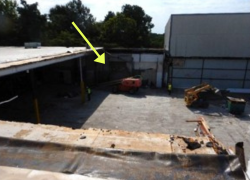
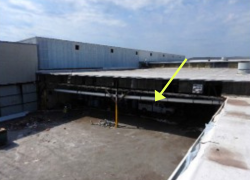
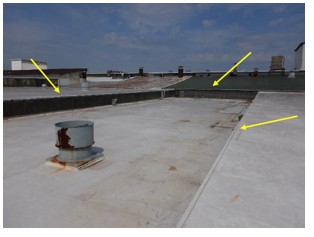
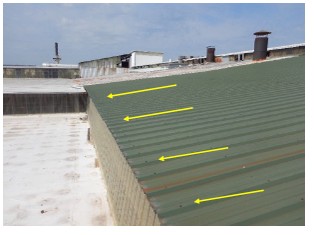
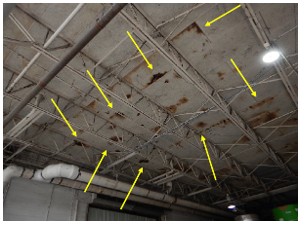
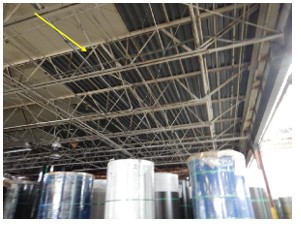
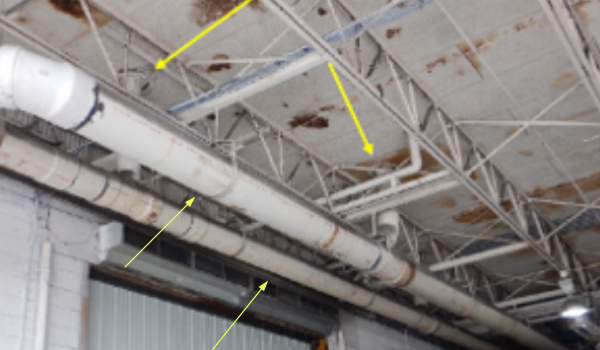
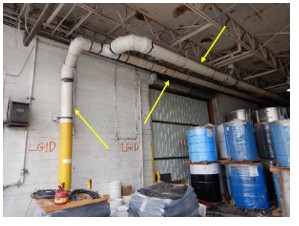
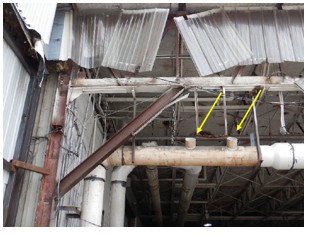
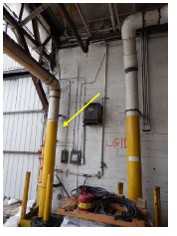
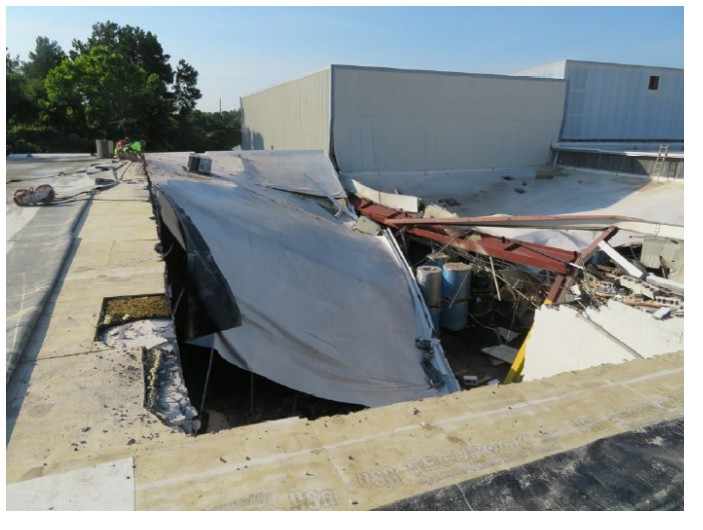
Conditions during the engineer’s site inspection differed significantly from those present shortly after the collapse occurred. Notably, the area of the collapse had been demolished and cleared from the site. The members had also not been preserved for subsequent inspection, limiting the ability to directly evaluate the failed components. The lowest roof surface was surrounded by the upper roof surfaces, creating a “bathtub-like” condition with respect to roof drainage. There were conditions consistent with prior long-term leakage through the roof surface, and also of prior roof deck repairs/replacement. Multiple lines of roof drains were observed at the adjacent upper roof surface; however, both lines of roof drains ultimately discharged into the same drain line below, the discharge of which was not visible above grade, in a location that would normally be observed by the building occupants or maintenance personnel. A similar condition reportedly also existed where the collapse occurred.
Relevant building code considerations
The 2012 IBC, which was in effect in the jurisdiction at the time of the 2016 reroofing activities, provided the following relevant sections:
“1510.1 General. Materials and methods of application used for recovering or replacing an existing roof covering shall comply with the requirements of Chapter 15.
Exception: Reroofing shall not be required to meet the minimum design slope requirement of one-quarter unit vertical in 12 units horizontal… in Section 1507 for roofs that provide positive roof drainage.“
“1503.4.1 Secondary (emergency overflow) drains or scuppers.
Where roof drains are required, secondary (emergency overflow) drains or scuppers shall be provided where the roof perimeter construction extends above the roof in such a manner that water will be entrapped if the primary drains allow buildup for any reason. The installation and sizing of secondary emergency overflow drains, leaders and conductors shall comply with Sections 1106 and 1108, as applicable, of the International Plumbing Code.“
The 2012 International Plumbing Code (IPC), which was also in effect at the time of the aforementioned reroofing activities, provided the following relevant sections:
“1106.1 General. The size of the vertical conductors and leaders, building storm drains, building storm sewers, and any horizontal branches of such drains or sewers shall be based on the 100-year hourly rainfall rate indicated in Figure 1106.1…“
“1108.1 Sizing of secondary drains. Secondary (emergency) roof drain systems shall be sized in accordance with 1106.1 based on the rainfall rate for which the primary system is sized… Scuppers shall be sized to prevent the depth of ponding water from exceeding that for which the roof was designed… Scuppers shall have an opening dimension of not less than 4 inches… The flow through the primary system shall not be considered when sizing the secondary roof drain system.”
“1108.2 Separate systems required. Secondary roof drain systems shall have the end point of discharge separate from the primary system. Discharge shall be above grade, in a location that would normally be observed by the building occupants or maintenance personnel.“
Relevant additional documentation obtained and reviewed during discovery
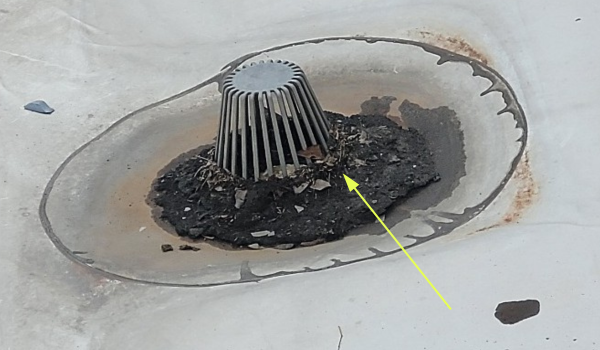
Additional information of the condition of the roof just following the collapse was obtained from documentation that was subsequently obtained during discovery. Some photographs depicted partial obstructed roof/dome strainers on drains at/near the area of the collapse:
The roofing contractor reportedly inspected the roof back in early 2016, and their inspection report recommended that reroofing occur. At the roof section where the collapse ultimately occurred, their report described that the roof was in “very poor” condition. It also determined:
“Drainage: The roof currently experiences too much standing water. The extent of the standing water could become a catalyst for premature roof failure.“
During the litigation associated with the roof collapse, the roofing contractor also described their position regarding what was not included within their scope and some of their communications with the building owner as related to the same:
“[We were] contracted to install a roof over the existing structure. We were not contracted to complete a drainage study or drainage calculations.”
“[We] offered a tapered roof to the customer… and [they] declined.”
However, the roofing contractor obtained the permit for the 2016 reroofing activities from the building department and, as was listed on the permit, the permit included the following language:
“Licensed Contractor / Applicant Declaration
I hearby certify that I have read and examined this document and know the same to be true and correct. All provisions of laws and ordinances governing this type of work will be complied with whether specified herein or not. Granting of a permit does not presume to give authority to violate or cancel the provisions of any other state or local law regulating construction or the performance of construction.“
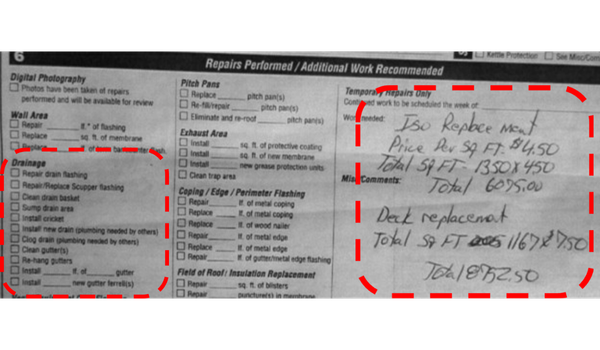
At least four change orders were provided by the roofing contractor during the course of the 2016 reroofing activities. The reviewed change orders did not identify ‘drainage’ repairs/corrections as part of the “additional work recommended”; however, “iso (insulation board) replacement” and “deck replacement” were recommended and occurred:
Discussion
Historical aerial imagery from 1970 through 1994 depicted that multiple additions were made to the building, around the lowest roof section where the failure occurred, creating a low-point drainage condition that existed and exists at the building, which would facilitate the impounding of rainwater/stormwater on the roof. This was evaluated as a potential contributing factor to the roof collapse. The maximum hourly rate of rainfall of approximately 3.21 inches on the DOL, while significantly below the reported 100-year hourly rainfall rate for the site, was not an insignificant amount of rainfall to occur in a relatively short period of time, also making it a potential contributing factor to the collapse. Partial blockages of some of the roof/dome strainers at/near the area of the collapse, which were observed in documentation obtained during discovery, may be relevant to evaluating maintenance history and drainage performance related to the collapse. And the roof system may not have been designed/constructed to sufficiently support impounded rainwater/stormwater, making it another potential contributing factor to the collapse.
The 2012 IBC, which was in effect at the time the reroofing permit was issued, required that “Materials and methods of application used for recovering or replacing an existing roof covering shall comply with the requirements of Chapter 15”. This included the requirements of sections such as “1503.4 Roof drainage”, and “1503.4.1 Secondary (emergency overflow) drains or scuppers”, in addition to code sections referenced by 1503.4.1, such as sections 1106.1 and 1108.1 of the 2012 IPC. Subsequent editions of the code, in addition to the previously referenced exception, also included an additional exception, as follows: “Recovering or replacing an existing roof covering shall not be required to meet the requirement for secondary (emergency overflow) drains or scuppers in [Section 1503.4] for roofs that provide for positive roof drainage.” This later exception may be relevant to interpreting the earlier code language.
The roofing contractor reportedly did “[offer] a tapered roof to the customer”, the customer reportedly “declined”, and the roofing contractor also reported they “were not contracted to complete a drainage study or drainage calculations”. However, customer direction would not necessarily eliminate applicable code requirements. The permit also stated that “all provisions of laws and ordinances governing this type of work will be complied with” on the permit they submitted. The contractor’s change order documentation from the time the reroofing services were completed had other options for “Repairs Performed / Additional Work Recommended”, related to roof slope corrections or roof drainage, such as “Repair drain flashing”, “Clean drain basket”, “Install cricket”, “Install new drain (plumbing needed by others)”, and “Clog drain (plumbing needed by others)”; however, the reviewed documentation did not identify such work as recommended or performed by the contractor.
Even the roofing contractor’s pre-reroofing inspection, from early 2016, of the section where the roofing failure subsequently occurred determined that “the roof currently experiences too much standing water. The extent of the standing water could become a catalyst for premature roof failure”. This is not a description of “positive roof drainage” and identified a potential risk of premature roof failure, which is relevant to evaluating the later collapse at the building.
Installing “a roof over the existing structure” can require the roofing contractor to do more than just install the new roofing material. In some circumstances, code sections may require removal of all existing layers of the roofing first. (This was done by the roofing contractor, during the 2016 reroofing activities, for at least approximately 15,000 square feet of roof insulation and 10,000 square feet of roof deck.) Sometimes code sections require structural analysis and reinforcement of the existing structure if the reroofing materials are too heavy; sometimes they require structural analysis and possibly retrofit of portions of lateral systems when a certain threshold amount of roofing materials are removed and replaced.
And sometimes code sections require that, during reroofing activities, drainage corrections are made and, where positive roof drainage is not present, correction of roofing slopes also occur where the slopes are less than 1/4:12. A roofing contractor should not consider the roof covering in isolation to all of the other code requirements that may be triggered as a result of that activity.
The available records indicate that the reroofing permit was never finalized. Additionally, the building department also reported they did not have a record of any inspections related to the permit being completed by the building department. In many jurisdictions, it is the responsibility of the contractor/applicant to request all required inspections for a given permit. Ideally, the building official will perform inspections and review whether roof slope and drainage issues have been addressed at the same time a roof is being recovered or replaced. That process limited this opportunity from the building official, in this instance.
This article is provided for general informational purposes only. The case study discussion is based on information reviewed in a specific matter and should not be interpreted as establishing a general standard of care, assigning responsibility, or determining the cause of any other roof collapse.
How Vertex can help
Vertex has forensic engineering and cost estimating experts skilled in evaluating roof drainage issues and roof collapses. For more information about our services, contact Steve Mickelson or submit an inquiry on our contact form below.